
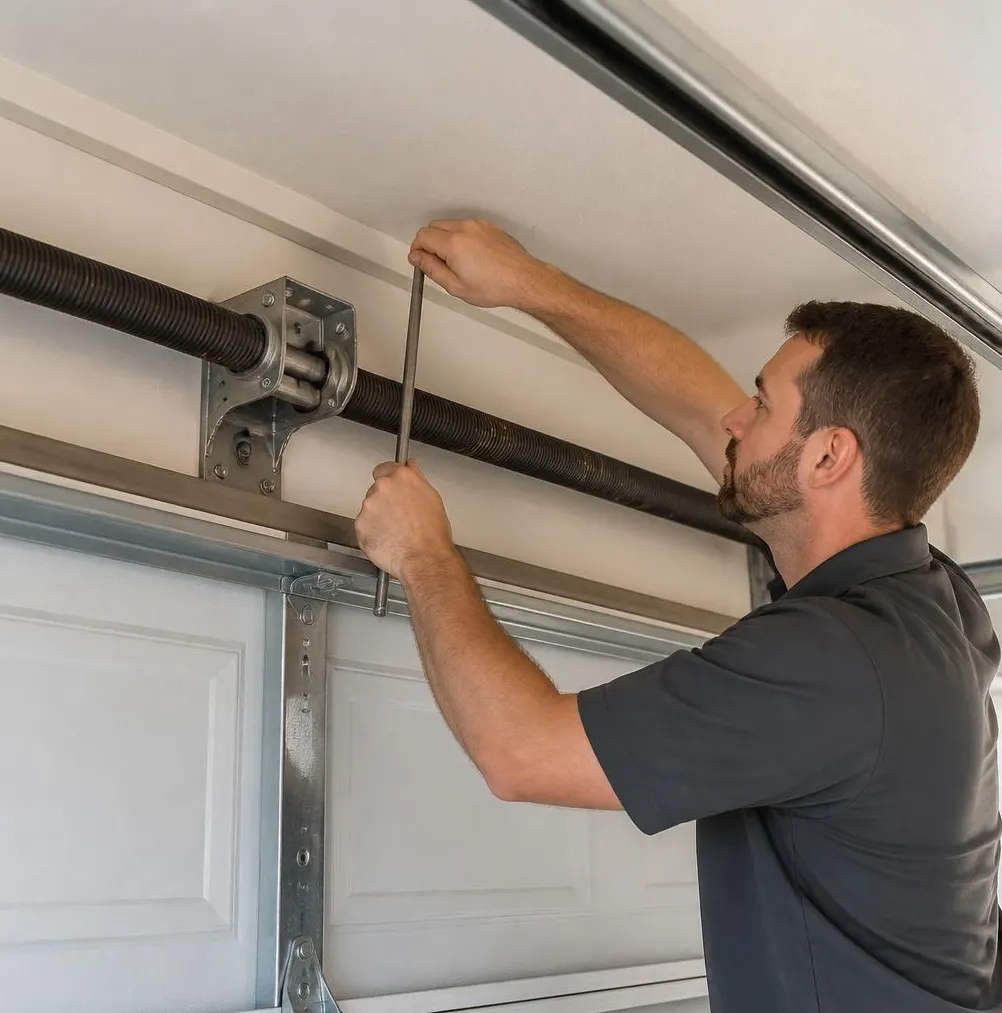
What Waiting Until Next Season Actually Costs
Put this off through another hurricane season and here's what you're risking: a door that's now sealing a finished room but leaks like it's still a garage, an opener straining against a door that's heavier than it was built for, and hardware quietly rusting behind drywall you just paid to hang. None of that shows up the week you finish the project. It shows up in six months, usually after a stretch of afternoon downpours or the first named storm, as a door that won't seal, a motor that burns out, or springs that snap early.
What Changes When a Garage Stops Being a Garage
The door doesn't know the room behind it is now a gym, office, or workshop. But the changes you make affect it directly:
- New flooring — gym mats, epoxy coating, or a subfloor — raises the ground level. That changes clearance for the safety sensors and can throw off how far the door travels before it hits the floor.
- Insulation and drywall add weight if they're attached to the door itself, or they change how the garage holds heat and moisture if they're on the walls. Either way, the door's spring tension and opener settings were calibrated for the original setup, not the new one.
- Sealing the room for air conditioning is the big one. Once you're cooling the space, any gap around the door becomes a spot where humid outside air meets cold inside air. That's where condensation forms, and condensation is what rusts hinges, rollers, and torsion springs well before their time — faster near the coast where salt air is already working against the metal.
- Blocking or removing vents to make the room feel finished can trap heat and moisture that used to escape. A door and its hardware exposed to constant humidity swings swells, binds, and wears out its weatherstripping faster.
So Who's Right?
Probably both of you, just about different things. One of you is thinking about how the room looks and functions day to day. The other is thinking about whether the door is still doing its job as an exterior wall — because that's what it becomes once the garage is finished space. The practical answer is that the look of the room doesn't matter much if the door behind it is losing its seal, binding on the track, or running on hardware that's rusting out of sight.
A Quick Checklist to Settle It
- Disconnect the opener and lift the door by hand. It should move smoothly and stay put halfway open. If it's heavy, drops, or fights you, the spring tension no longer matches the door's actual weight.
- Check the weatherstripping along the bottom and sides. Daylight showing through means wind-driven rain and humidity are getting in — a real problem during storm season.
- Look at the opener's force settings. If the door's weight changed at all (added panels, new insulation), the opener should be recalibrated or it will keep straining the motor every time it runs.
- Inspect the springs and rollers for surface rust, especially if the garage sat sealed and humid for a while. Early rust on a coastal property spreads fast.
The Trade-off Worth Knowing
Running AC into a garage with an unsealed or poorly balanced door is like cooling a room with a window cracked open. You pay for it twice — once in energy loss, once in the moisture damage that follows. If the conversion is permanent, it's usually worth addressing the door itself rather than just the room around it.
When to Call Fort Lauderdale Door & Opener
If the door feels heavy, uneven, or hasn't been checked since the conversion started, a Garage Door Tune-Up & Maintenance visit will confirm whether the spring tension, tracks, and opener settings still match the door's actual weight and use. If the panels themselves are swollen, rusted, or no longer sealing well, Garage Door Panel Replacement can bring the door up to match a room that's meant to be lived in, not just parked in.
If you're turning the garage into something more than storage, give Fort Lauderdale Door & Opener a call and let's make sure the door is keeping up with the rest of the room.