
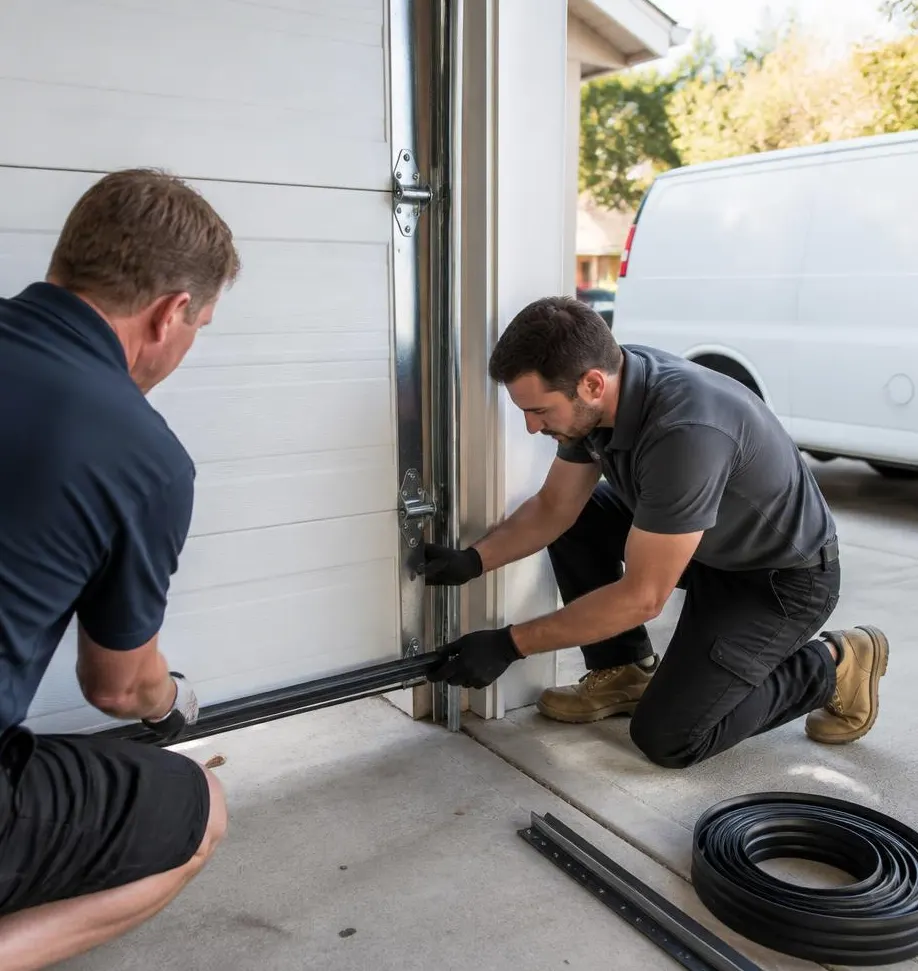
The most common mistake homeowners make this time of year is Googling "winterize my garage door" and following a checklist written for Ohio or Minnesota. It's tempting because the advice sounds thorough: seal the gaps, insulate the panels, protect against freezing. None of it is wrong, exactly — it's just answering a question nobody in Broward County is actually asking. There's no frost line here, no risk of a garage door freezing shut, no need to worry about ice damming at the header. Following that checklist gives you a false sense of being "done" while skipping the things that genuinely wear on a garage door after a South Florida hurricane season.
What "Winter Prep" Actually Means Here
From late November through the dry season, Fort Lauderdale shifts from heavy humidity and afternoon downpours to lower humidity and more consistent sun. That shift matters more for a garage door than any drop in temperature. Wood composite panels and door seals that swelled slightly during the wet months can shrink back down, changing how the door seats against the frame. Springs and hardware that absorbed six months of salt-laden moisture are due for a real inspection, not a guess. And with hurricane season officially winding down, this is the window to check for damage you may have ignored while you were just hoping the door would hold through the next storm.
Check for Hurricane-Season Wear Before You Forget
Even if your door never took a direct hit, wind-load stress adds up. Strong gusts push and pull on the panels and track hardware every time a storm rolls through, and that repeated flexing loosens things gradually.
- Inspect the tracks for small bends or gaps where the rollers no longer sit flush — a byproduct of the door flexing under wind pressure.
- Check the panels for hairline cracks or soft spots, especially near the bottom, where humidity and standing water from afternoon downpours do the most damage.
- Look at the bottom seal. If it's cracked, flattened, or pulling away from the door, it let in more wind-driven rain than you probably realized.
- Test the auto-reverse safety feature by placing a piece of wood in the door's path. If it doesn't reverse immediately, that's not a minor issue — fix it before you forget it's broken.
Lubrication and Hardware for the Dry Season Shift
Humidity swings are hard on moving metal parts. As the air dries out, hinges, rollers, and the torsion spring can develop friction they didn't have in August.
- Apply a silicone-based lubricant (not WD-40, which attracts dust) to hinges, rollers, and the torsion spring.
- Tighten any hardware that's visibly loose — nuts and bolts on the track brackets are the usual culprits after months of vibration.
- Listen for new grinding or popping sounds during operation. A door that ran quietly all summer and suddenly sounds different in November is telling you something changed.
Rust and Salt Air Checks Near the Coast
If you're in Lauderdale-by-the-Sea, Pompano Beach, or anywhere close to the water, salt air has been working on your garage door hardware all year, and it shows up most clearly once the humidity drops and surfaces dry out enough to reveal corrosion.
- Look closely at spring coils, hinges, and track bolts for orange or white rust spots — early signs that metal is corroding from the inside out.
- Wipe down the track and hardware with a dry cloth, then apply a corrosion-inhibiting lubricant to exposed metal.
- If a spring shows rust pitting rather than surface discoloration, that's a structural concern, not a cosmetic one — a pitted spring is weaker than it looks and more likely to fail without warning.
If You're Leaving Town for the Holidays
Snowbird season and holiday travel both mean more people leaving their Fort Lauderdale home empty for days or weeks at a stretch. Before you go:
- Disconnect or disable any garage door schedule features on smart openers so the door isn't opening on a timer while you're away.
- Make sure the manual release lock is engaged if you're leaving the car elsewhere, since an unlocked garage door is an easy entry point.
- If the opener's battery backup hasn't been tested recently, do it now — a power blip while you're gone shouldn't leave the door stuck open or shut.
When to Call Fort Lauderdale Door & Opener
If you spot rust pitting on the springs, a bottom seal that's beyond patching, or a door that's suddenly noisier or harder to lift, don't wait for it to get worse. Our Garage Door Tune-Up & Maintenance service covers exactly this kind of seasonal inspection — lubrication, hardware tightening, balance checks, and a close look at wear from the past six months of heat and storms. If the inspection turns up a spring that's corroded or under too much strain, our Garage Door Spring Repair team can replace it safely before it fails on its own schedule instead of yours.
If you're in Fort Lauderdale, Oakland Park, Wilton Manors, Pompano Beach, Lauderdale-by-the-Sea, Lauderhill, Plantation, or Davie and your garage door needs a real seasonal check instead of a snow-belt checklist, give Fort Lauderdale Door & Opener a call. We'll get it handled right the first time.